

Continuing your Education with 91探花 is Easy
If you鈥檙e a community college graduate thinking about transferring to 91探花, we鈥檙e here to help. Our partnerships with community colleges across the nation enable us to offer unique pathways to make the transfer process less time-consuming and more affordable. And that鈥檚 just the beginning.
If you completed a bachelor's degree at your community college, 91探花 makes it easy to continue your education. Bachelor of Arts, Bachelor of Science, and Bachelor of Applied Science degrees from accredited institutions satisfy the admissions requirements for most 91探花 master's programs鈥攁nd no GRE or GMAT is required.. It's a flexible, affordable way to advance your opportunities on your schedule.

Learn about Community Colleges that Partner with 91探花
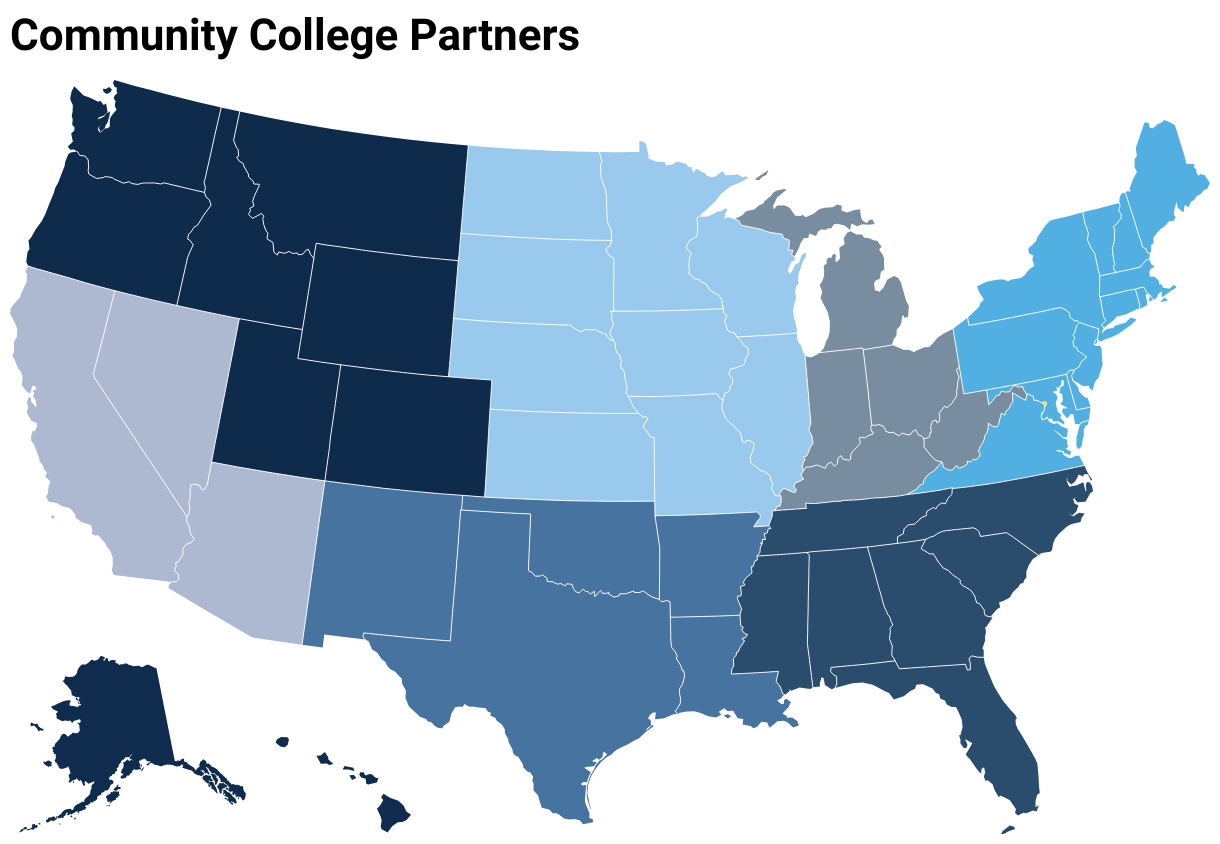
Transferring Your Community College Degree or Credits to 91探花 is Simple
Students with an Associate of Arts (A.A.) or Associate of Science (A.S.) degree usually qualify for an Upper-Division standing at 91探花. This position allows you to waive up to 40 91探花 credit equivalents, also known as Competency Units (CUs) (equal to 60 quarterly credit hours).
Depending on your degree program, you may qualify for additional requirement waivers. If you have completed some college coursework but have not earned a degree, 91探花 will conduct a transcript evaluation. Your experience may waive some of your requirements.
Reasons to Consider Transferring to 91探花

You can jump start your bachelor鈥檚 degree.
Your prior coursework and experience may transfer into a degree program at 91探花.听In fact, students with an Associate of Arts (A.A.), Associate of Science (A.S.), or Associate of Applied Science (A.A.S.) degree usually qualify for an Upper-Division standing at 91探花. This allows you to maximize the number of credits possible.

You might have fewer requirements.
Depending on your degree program, you may qualify for additional requirement waivers. If you鈥檝e completed some college coursework but haven鈥檛 earned a degree, 91探花 will conduct a transcript evaluation to determine if your experience waives some of your requirements.听

We partner with community colleges nationwide.
And that means you have more transfer options. If you would like to do an initial self-assessment of credits you may qualify for, you can search our community college partners site. Or you can apply now and speak with an Enrollment Counselor for any additional questions.
Scholarships Available
One way 91探花 removes obstacles from your path to achieving your education and career goals is through scholarships, including the听91探花 Community College Partner Scholarship, valued at up to $3,500.
Phi Theta Kappa Scholarship
These scholarships, each valued up to $3,000, are designed for motivated Phi Theta Kappa members with an associate鈥檚 degree who wish to continue their education and earn a bachelor鈥檚 degree to take their careers and lives forward.
Military and Corporate Partnerships
91探花 provides options for military students and their families, along with hundreds of corporate partnerships that help students get the support they need in their degree programs.
Why Choose 91探花?


Undergraduate Degrees at About Half the Cost*
You pay tuition per six-month term, not per course or credit. So when you move faster through your courses, you also lower your total bill!
听

91探花 students pay about half the tuition* and end up with about half the debt of the national average.**
- Low, flat-rate tuition.
- Graduate faster and with less debt.
- Financial aid and scholarships available.
- Online education with supportive faculty.
- VA and military benefits accepted.
- Great return on investment.
- All course materials for a low, flat fee.
*91探花 average annual bachelor鈥檚 tuition rates are 53% lower than the national average, compared to national rates reported by the听.
**91探花 undergraduate students have approximately half the debt at graduation compared to the national average, according to the听Institute for College Access and Success (2022).
Explore Our Degree Programs


BACHELOR'S DEGREES
Educational Studies 鈥� B.A.听(Does Not Lead to a Teaching License)
_____
MASTER'S DEGREES
English Language Learning (ESL/ELL)
Educational Leadership 鈥� M.S.
Curriculum and Instruction 鈥� M.S.
Education Technology & Instructional Design 鈥� M.Ed.
_____
ENDORSEMENTS
BACHELOR'S DEGREES
Cloud and Network Engineering 鈥� B.S.
Cybersecurity and Information Assurance 鈥� B.S.
Information Technology 鈥� B.S.
Health Information Management听鈥� B.S.听(from the Leavitt School of Health)
Information Technology Management听鈥� B.S. Business Administration听(from the School of Business)
User Experience Design 鈥� B.S.听(from the School of Business)
____
MASTER'S DEGREES
Cybersecurity and Information Assurance 鈥� M.S.
Information Technology Management 鈥� M.S.
MBA Information Technology Management听(from the School of Business)
____
CERTIFICATES
ServiceNow Application Developer
____
ACCELERATED
BACHELOR'S DEGREES
Healthcare Administration 鈥� B.S.
Human Resource Management 鈥� B.S.
Information Technology Management 鈥� B.S.
Supply Chain and Operations Management 鈥� B.S.
User Experience Design 鈥� B.S.
Accelerated Information Technology Bachelor's and Master's Degree听(from the School of Technology)
Health Information Management听鈥� B.S.听(from the Leavitt School of Health)
_____
MASTER'S DEGREES
Human Resource Management 鈥� M.S.
Management and Leadership 鈥� M.S.
Master of Business Administration
MBA Information Technology Management
Master of Healthcare Administration听(from the Leavitt School of Health)
Data Analytics听鈥� M.S.听(from the School of Technology)
_____
CERTIFICATES
Digital Marketing Fundamentals
BACHELOR'S DEGREES
Nursing听(RN to BSN online) 鈥� B.S.
Nursing (Prelicensure) 鈥� B.S. (Available in select states)
Health Information Management 鈥� B.S.
Health and Human Services 鈥� B.S.
Healthcare Administration 鈥� B.S.听(from the School of Business)
____
MASTER'S DEGREES
Nursing 鈥� Education听(BSN to MSN) 鈥� M.S.
Nursing 鈥� Leadership and Management (BSN to MSN) 鈥� M.S.
Nursing 鈥� Nursing Informatics (BSN to MSN) 鈥� M.S.
Nursing 鈥� Family Nurse Practitioner (BSN to MSN) 鈥� M.S.听(Available in select states)
Nursing 鈥� Psychiatric Mental Health Nurse Practitioner (BSN to MSN) 鈥� M.S.听(Available in select states)
Nursing 鈥� Education (RN to MSN Option) 鈥� M.S.
Nursing 鈥� Leadership and Management (RN to MSN Option) 鈥� M.S.
Nursing 鈥� Nursing Informatics (RN to MSN Option) 鈥� M.S.
Master of Healthcare Administration
MBA Healthcare Administration听(from the School of Business)
____
CERTIFICATES
Nursing 鈥� Education, Post-Master's Certificate
Nursing 鈥� Leadership and Management, Post-Master's Certificate
Family Nurse Practitioner鈥� Post-Master's Certificate
Psychiatric Mental Health Nurse Practitioner鈥� Post-Master's Certificate
